Dear Mr. Smallwood:
Confederation in the words of those who lived it
(co-edited with Vicki S. Hallett)
Memorial University Press, 2025.
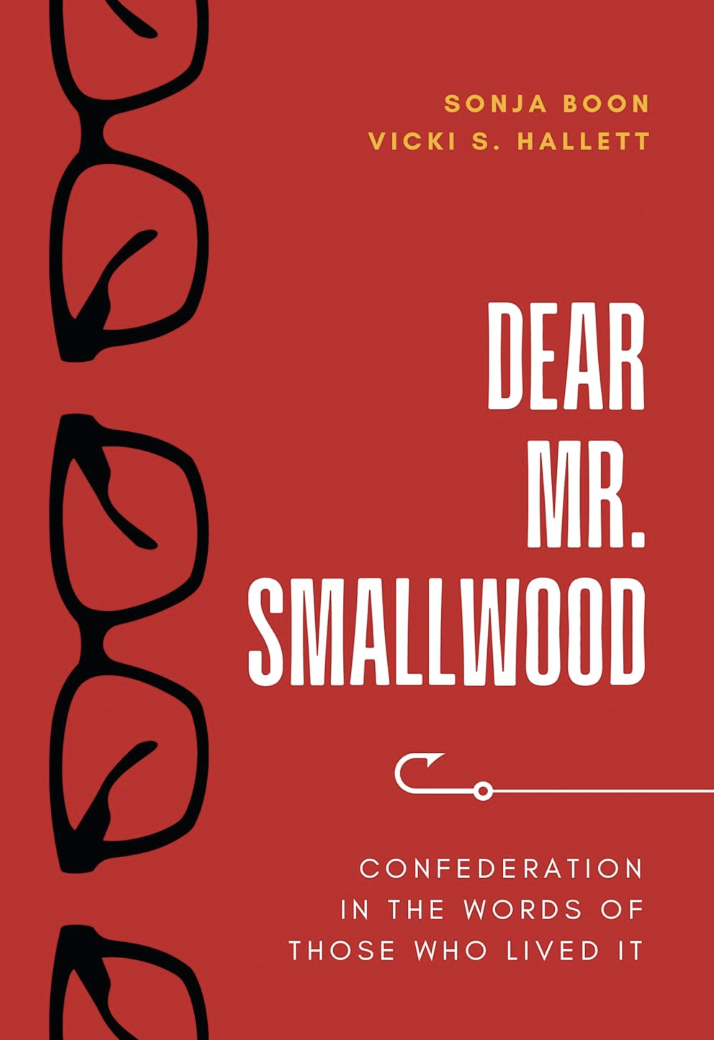
Dear Mr. Smallwood considers the lives and stories of everyday Newfoundlanders and Labradorians as they navigated what was arguably the biggest political transition of their lifetimes: the entry of the former nation of Newfoundland into Confederation with Canada.
A collaborative project that brings together archival materials, personal reflections, scholarly essays, and poetic and visual responses, can be seen as a layered patchwork quilt. The letters to Smallwood—a small sampling of 250 chosen by contributors from an archival collection of thousands—are the colourful swatches that reveal not just the individual voices of Newfoundlanders and Labradorians of all ages at mid-century, but also the beating life narrative—the collective autobiography—of Newfoundland and Labrador itself.
fair winds: as ships (chapbook)
pinhole poetry, 2025
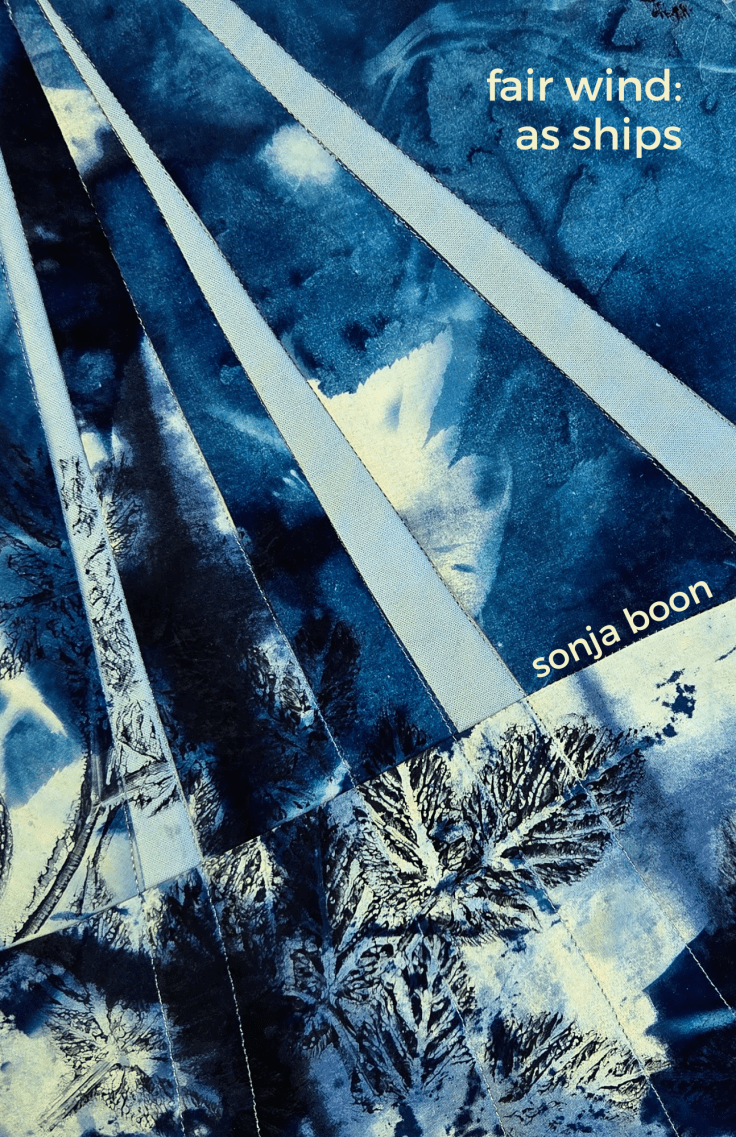
This collection of found poetry is based on diaries by a group of five settler women who lived in Nova Scotia in the nineteenth century.
There is nothing particularly remarkable about these women; they were not in any way famous. What is remarkable is their attention to recording the day to day of their lives, to ensuring that there was some sort of record to mark their existence.
As a group, these women’s lives were shaped and formed by the sea: weather, storms, tides, and waves mark the seasons and the rhythms of their day-to-day lives. But their lives were also shaped and formed by empire: by the political and economic ambitions of a British Empire that spanned the globe.
In “fair wind: as ships,” I’m interested in questions of fragmentation, looking at the meanings these diarists might have embedded in the intimate maps to their lives.
What the Oceans Remember:
Searching for Belonging and Home
WLU Press, 2019.

Short-listed, Foreword INDIES (Multicultural) 2019
Short-listed, Foreword INDIES (Autobiography & Memoir) 2019
Long-listed, BMO Winterset Award 2019
Long-listed, NL Book Awards, 2021
Sonja Boon’s heritage is complicated. Although she has lived in Canada for more than 30 years, she was born in the UK to a Surinamese mother and a Dutch father.
Boon’s archival research—in Suriname, the Netherlands, the UK, and Canada—brings her opportunities to reflect on the possibilities and limitations of the archives themselves, the tangliness of oceanic migration, histories, the meaning of legacy, music, love, freedom, memory, ruin, and imagination. Ultimately, she reflected on the relevance of our past to understanding our present.
Deeply informed by archival research and current scholarship, but written as a reflective and intimate memoir, What the Oceans Remember addresses current issues in migration, identity, belonging, and history through an interrogation of race, ethnicity, gender, archives and memory. More importantly, it addresses the relevance of our past to understanding our present. It shows the multiplicity of identities and origins that can shape the way we understand our histories and our own selves.
The Routledge Introduction to Auto/Biography in Canada
(with Laurie McNeill, Julie Rak, and Candida Rifkind
Routledge, 2023.
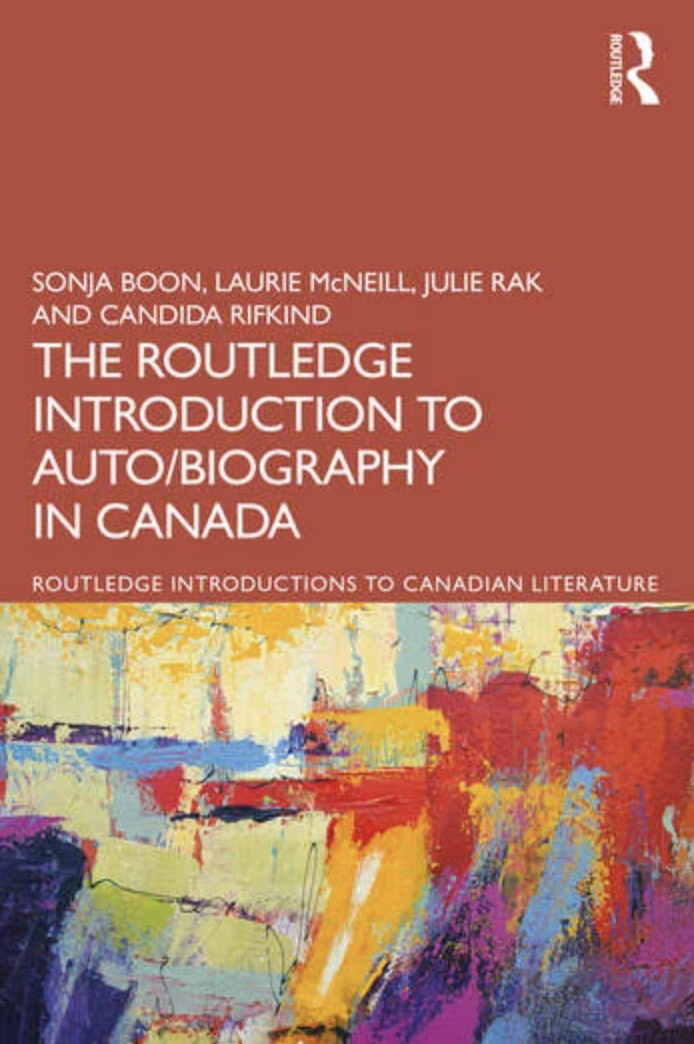
The Routledge Introduction to Auto/biography in Canada explores the exciting world of nonfiction writing about the self, designed to give teachers and students the tools they need to study both canonical and lesser-known works. The volume introduces important texts and contexts for interpreting life narratives, demonstrates the conceptual tools necessary to understand what life narratives are and how they work, and offers an historical overview of key moments in Canadian auto/biography. Not sure what life writing in Canada is, or how to study it? This critical introduction covers the tools and approaches you require in order to undertake your own interpretation of life writing texts. You will encounter nonfictional writing about individual lives and experiences—including biography, autobiography, letters, diaries, comics, poetry, plays, and memoirs. The volume includes case studies to provide examples of how to study and research life narratives and toolkits to help you apply what you learn. The Routledge Introduction to Auto/biography in Canada provides instructors and students with the contexts and the critical tools to discover the power of life writing, and the skills to study any kind of nonfiction, from Canada and around the world.
Autoethnography and Feminist Theory at the Water’s Edge: Unsettled Islands
with Lesley Butler and Daze Jefferies
Palgrave, 2018
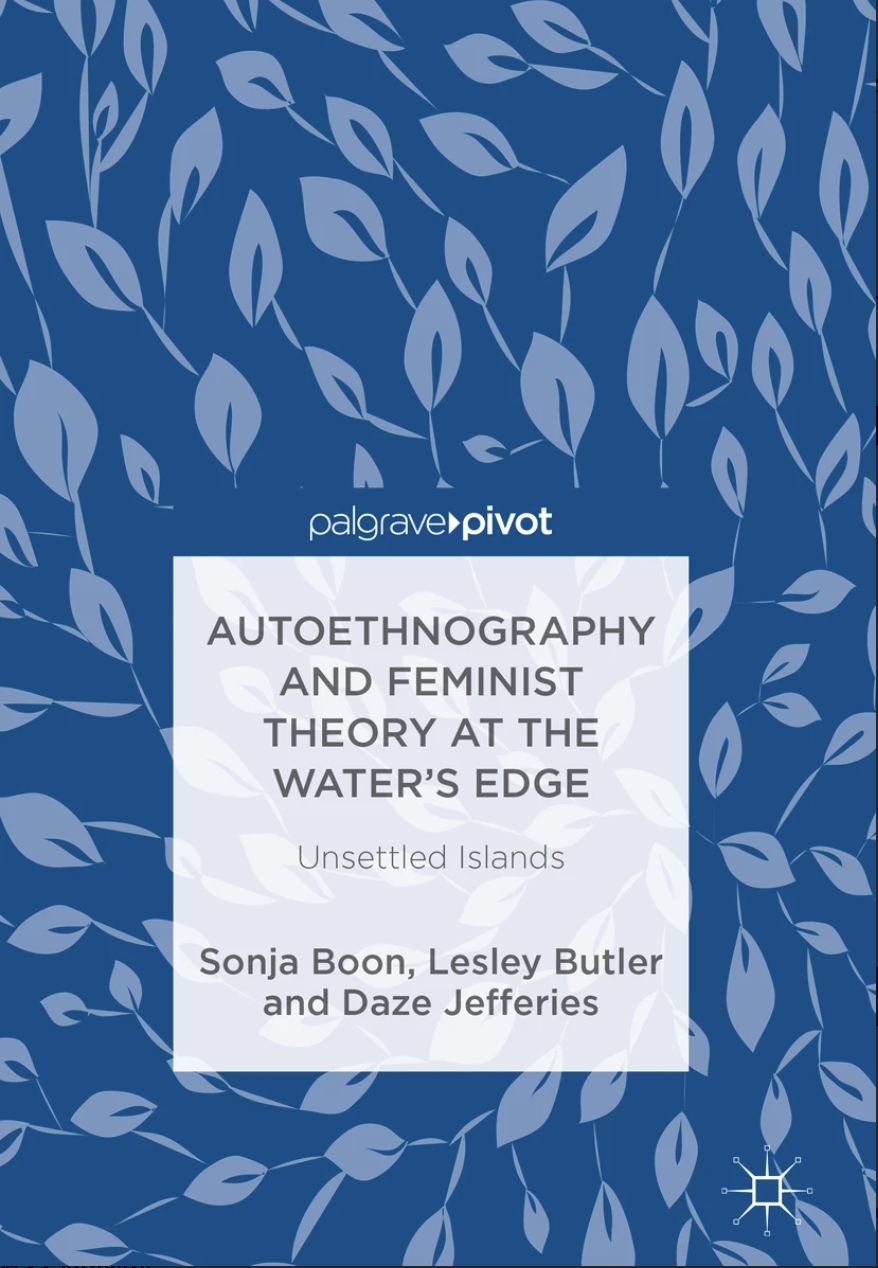
Autoethnography and Feminist Theory at the Water’s Edge: Unsettled Islands takes an intimate, collaborative, interdisciplinary autoethnographic approach that both emphasizes the authors’ entangled relationships with the more-than-human, and understands the land and sea-scapes of Newfoundland as integral to their thinking, theorizing, and writing. The authors draw on feminist, trans, queer, critical race, Indigenous, decolonial, and posthuman theories in order to examine the relationships between origins, memories, place, identities, bodies, pasts, and futures. The chapters address a range of concerns, among them love, memory, weather, bodies, vulnerability, fog, myth, ice, desire, hauntings, and home.
Autoethnography and Feminist Theory at the Water’s Edge will be of interest to students and scholars across a range of disciplines including gender studies, cultural geography, folklore, and anthropology, as well as those working in autoethnography, life writing, and island studies.
Telling the Flesh: Life Writing, Citizenship, and the body in the Letters to Samuel Auguste Tissot
McGill-Queen’s University Press, 2015
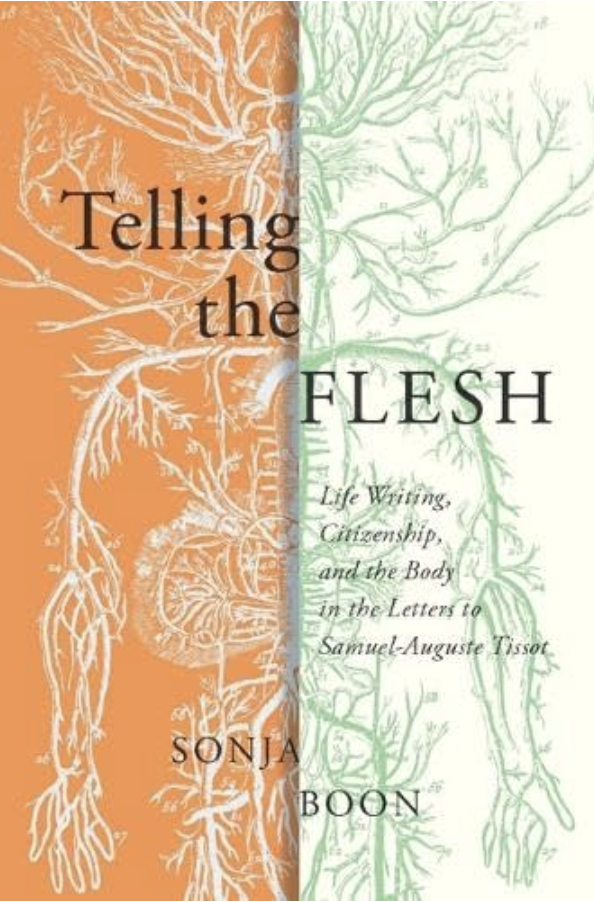
In the second half of the eighteenth century, celebrated Swiss physician Samuel Auguste Tissot (1728-1797) received over 1,200 medical consultation letters from across Europe and beyond. Written by individuals seeking respite from a range of ailments, the letters to Tissot not only express the struggle of individuals to understand the body and its workings, but also reveal the close connections between embodiment and politics.
Through the process of writing letters to describe their ailments, the correspondents created textual versions of themselves, articulating identities shaped by their physical experiences. Using these identities and experiences as examples, Sonja Boon argues that the complaints voiced in the letters were intimately linked to broader social and political discourses of citizenship in the late eighteenth century, a period beset with concerns about depopulation, moral depravity, and corporeal excess, and organized around intricate rules of propriety.
The Life of Madame Necker:
Sin, Redemption, and the Parisian Salon
Pickering & Chatto, 2011.
© Sonja Boon, 2026.
 SONJA BOON