Since 2023, stitchery has become a key component of my researcch, writing, and creative process. Art quilts allow the opportunity to work intimately with my research, and to commune with archival materials in a more tactile way.
This work, which falls under what Ruth Singer would term “research-based artwork,” brings together archival materials (often diaries and letters) and family ephemera (photographs, oral histories, memories, etc), offers a different way for me to tell and share women’s stories, not just within my own family history, but also beyond.
Below, I include a sample of this work.
Genealogies of Loss, 2024
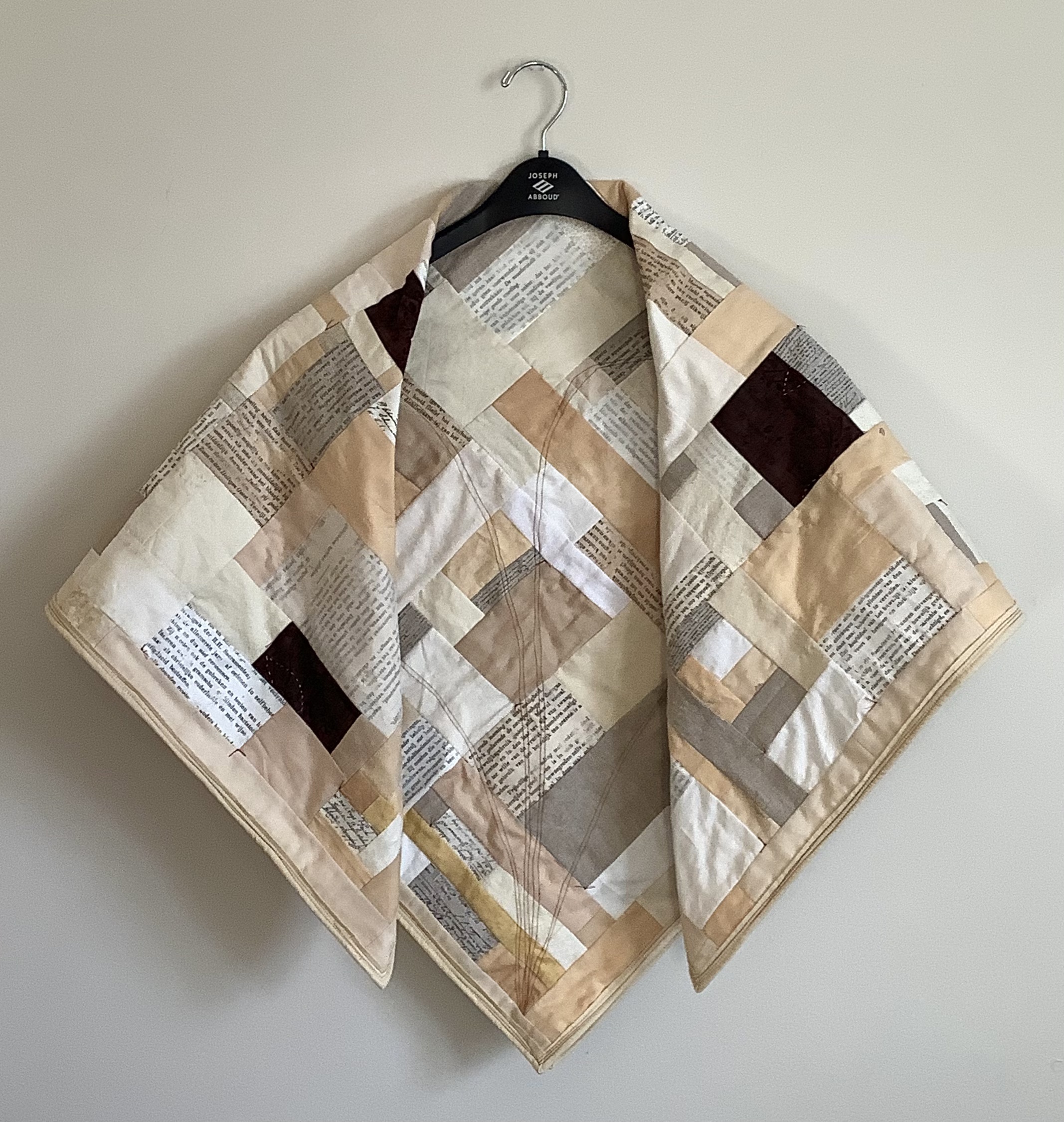
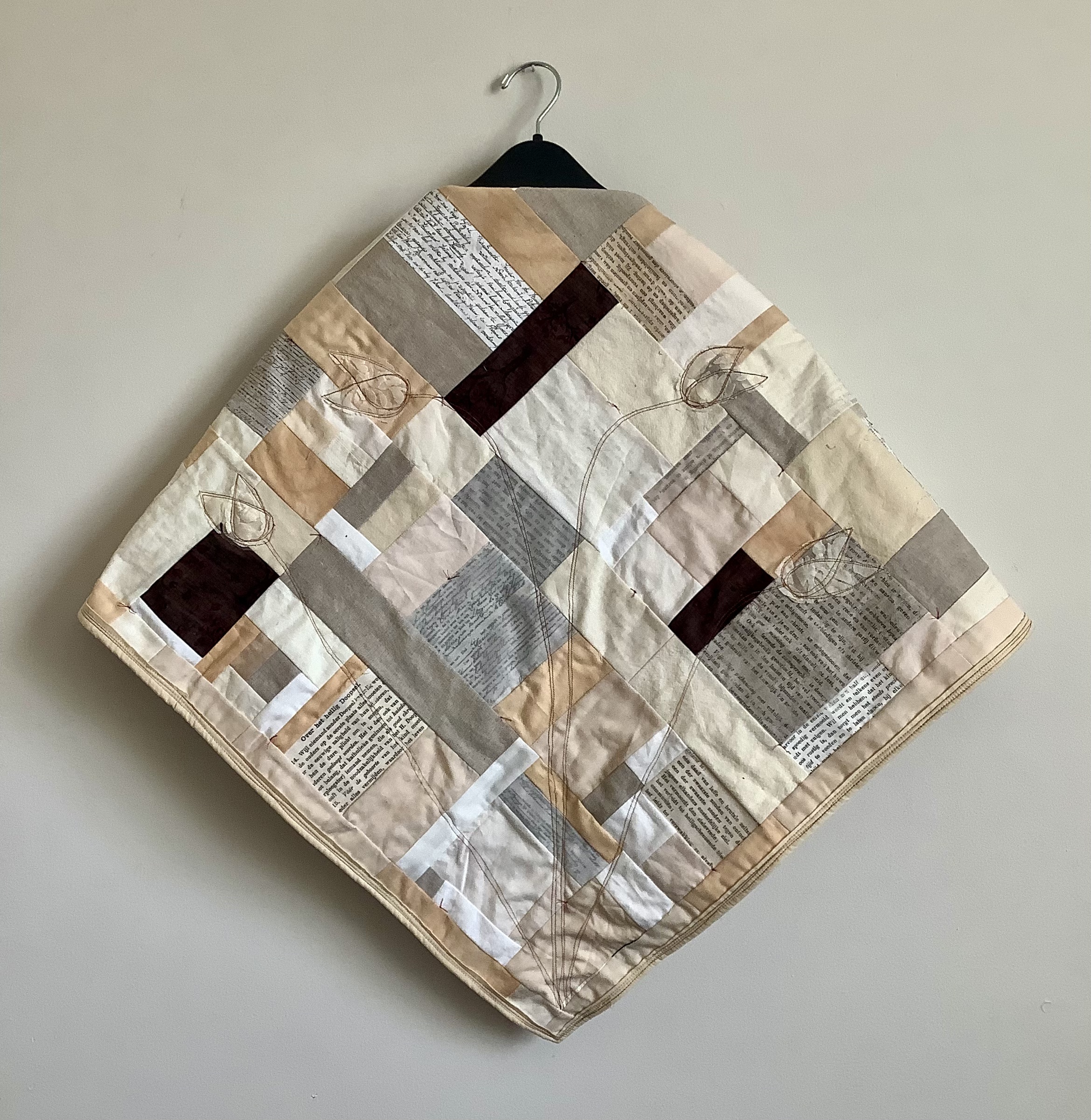

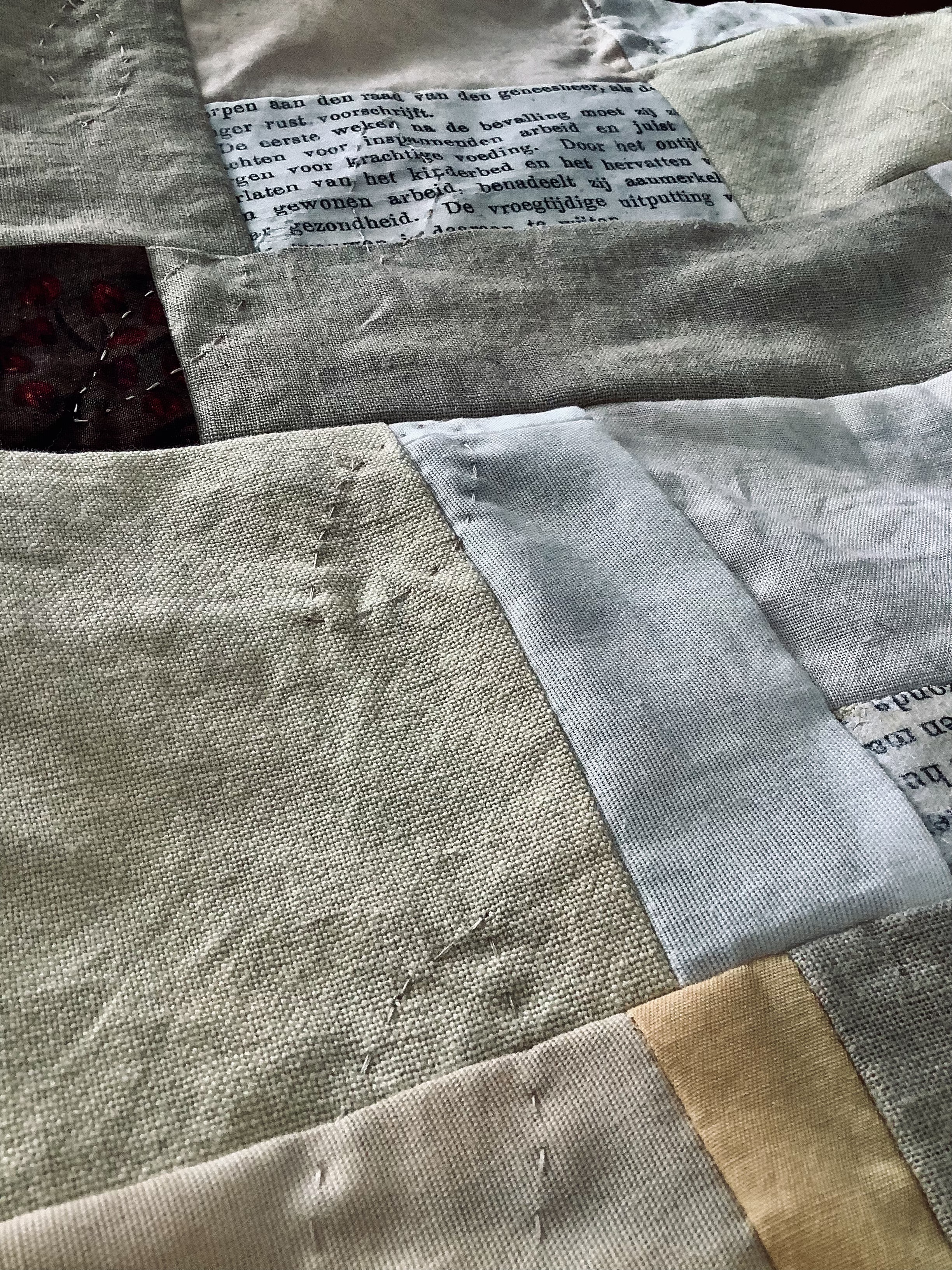


Genealogies of loss considers the effects of reproductive histories, obligations, and legacies on women’s lives, and honours 8 Adrianas in my paternal grandmother’s family line, most of whom died prematurely after too many successive pregnancies. It is constructed in the form of the shawls common to 19th-century women’s dress in Noord Brabant, the Netherlands. These shawls wrap around the core of the body: heart, lungs, and uterus, and would have passed between women, carrying stories from one generation to the next.
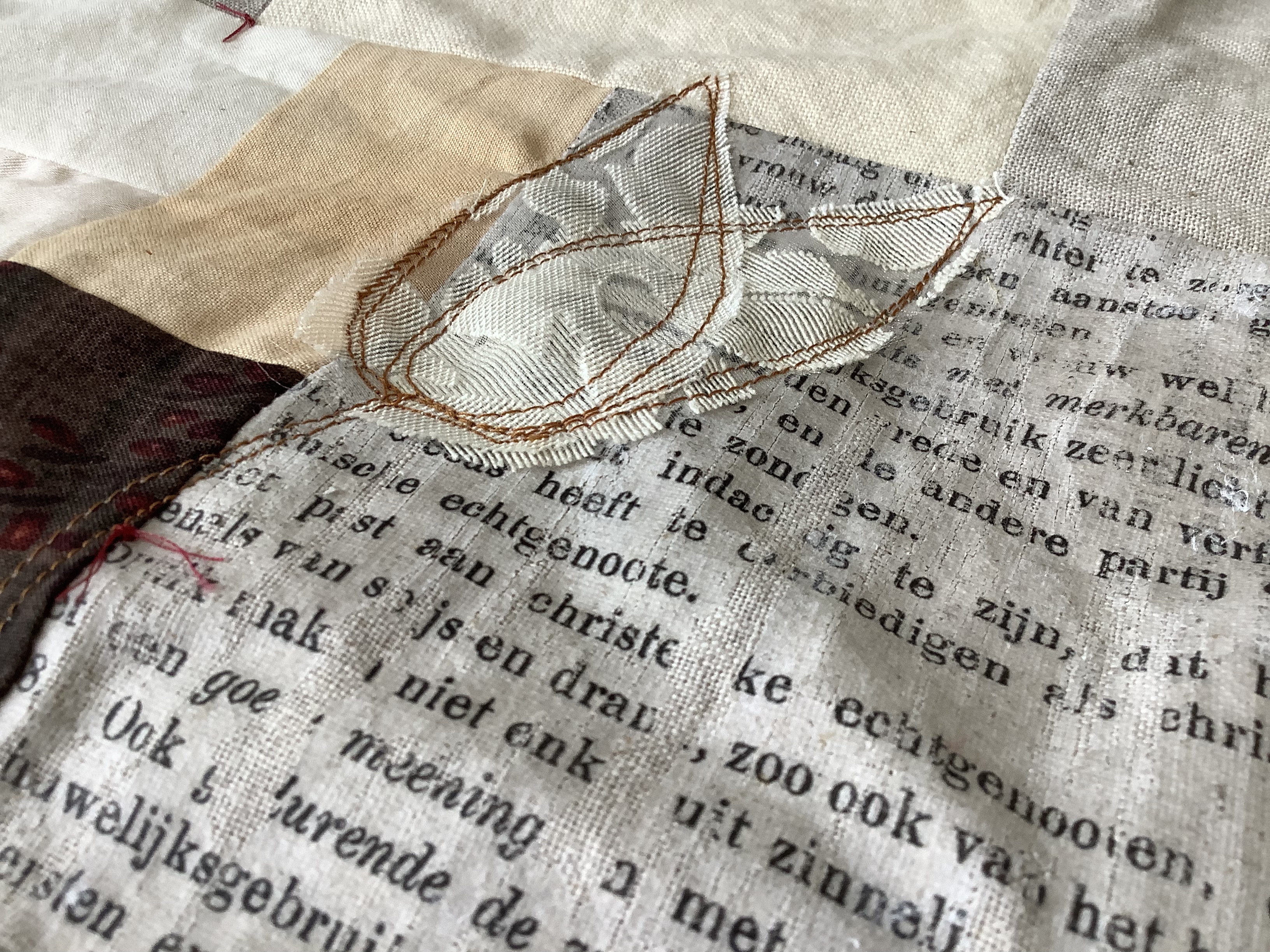
On one side of this piece, I interrogate the power of the Catholic church, represented in excerpts from a Catholic marriage manual my grandparents received, and include 8 shadow tulips, one for each Adriana, to mark their deaths and the ways that their memories haunted subsequent generations. I also include outlines of 48 leaves (only visible when looking very carefully!), to represent their stillborn babies and other babies who died during childhood.
On the other side of this piece, I imagine what might have been possible had these Adrianas been able to live full, long, and healthy lives, and to share their stories – in their own words and on their own terms – with women in subsequent generations. On this side, I engage rich colours, stitching bold tulips and using colourful threads to connect each of these tulips to others. To reflect the fact that shawls and dress were often passed on to subsequent generations and to build on a sense of softness and comfort rather than the harsh directives of the church, I used well-worn (almost threadbare) tea-stained cotton.
This quilt is entirely made with recycled fabrics.
Quilting Colonialism, 2024
This project started out as a single quilt but soon got out of hand. Following the work of art historian Vanessa Nicholas, who theorizes nineteenth-century settler women’s quilting in Ontario as a form of ‘invasive species,’ I set out to think about how that idea might translate into the Nova Scotia context. To think this through, I began creating monoprints on recycled and often vintage linens using the most invasive species I could imagine: goutweed, a rhizome introduced by European settlers in the nineteenth century, and almost impossible to eradicate. It seemed a very strong metaphor for colonialism. I also printed doilies – as a reference to the domestic feminine – in other layers.
When Jupiter Calls
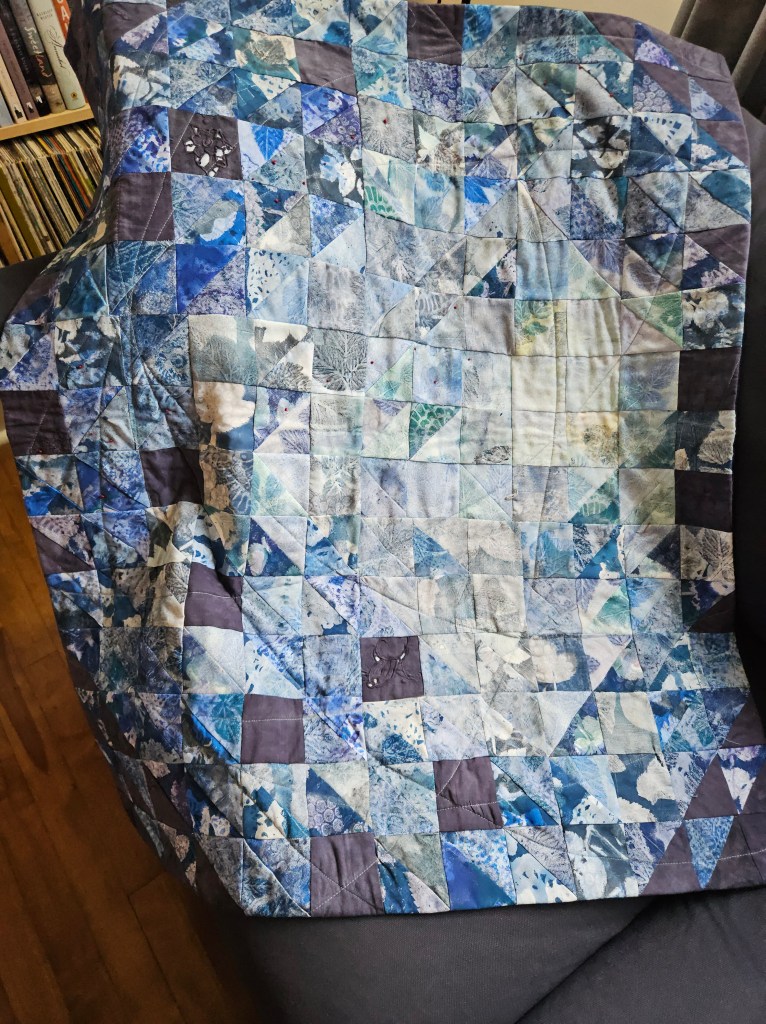
“When Jupiter Calls” is a response to a diary written by Sarah Clinch, an eighteen-year-old who came up from Boston to Halifax to stay with extended family in 1853-4. Sarah’s diary is filled with stories common to young women of her age: fashion (ribbons, lace, fabrics), music lessons, social gatherings, and possible romantic intrigues, but she also mentions the night sky. This quilt represents the point where ocean and night sky meet, and where each appears to reflect the other. In the top third of the quilt, I’ve included some french knot constellations.
I Arose Early With the Sun

I created this art quilt in response to the diary of Margaret Dickie Michener, of Hantsport. Michener was the wife of a seaman and her diary shows that she was worried that he would be lost at sea. But it also reveals how much inspiration and comfort she took from the natural world around her. She found solace in the great Fundy tides when her husband passed (not at sea, incidentally), for example. She also spent a lot of time walking. On a Sunday in May 1850, while walking the shore, she wrote,
“I arose this morning with the sun and took a walk down to the shore.
The scene is lovely. It was high tide. Six vessels are on the beach. The air
was so clear I could hear someone singing over in Newport….”
That imagery – of hearing a voice from across the water – stood out for me, and I wanted to capture that song, crystal clear notes suspended over the sea that separated Michener from the voice she heard, and printed goutweed ‘notes’ in red. At the bottom, I include part of a mariner’s star in reference to her husband, who was always in her thoughts.
Fading
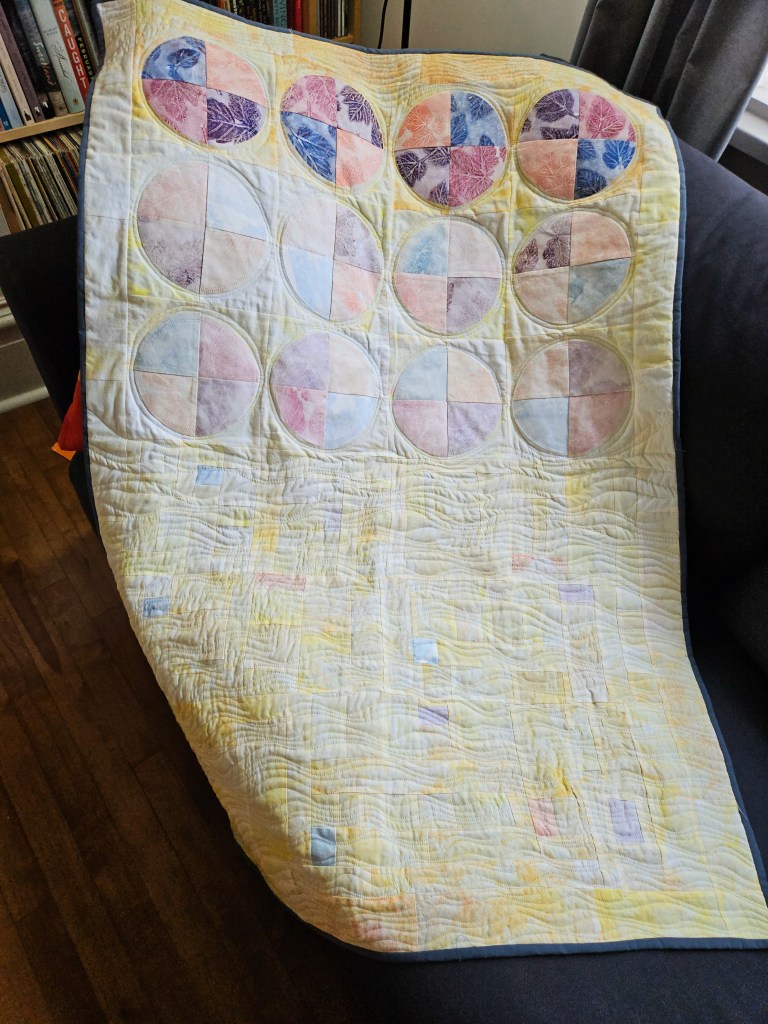
Fading is a response not to a diary, but to a quilt and its story. In 1838, Mary Leach Carter married Henry Charman in a small town in Devon, UK. Then, they set sail for the Americas. It’s unclear exactly where they were headed (just somewhere in the Caribbean according to family lore), but as a result of some misadventure – a shipwreck? a gale? – they ended up in Nova Scotia. She is said to have made this quilt while on this trip. The new Mrs. Charman’s quilt includes 63 appliquéd circles (each one made up of 10 ‘slices’) and includes over 80 different fabrics, although most are very faded due to the fact that early nineteenth-century calicoes were not generally colourfast. I’ve been researching her story, but each time I think I have a handle on it, it fades, and I lose touch with her again. I included fading circles falling as if into a rolling sea.
Rhizome
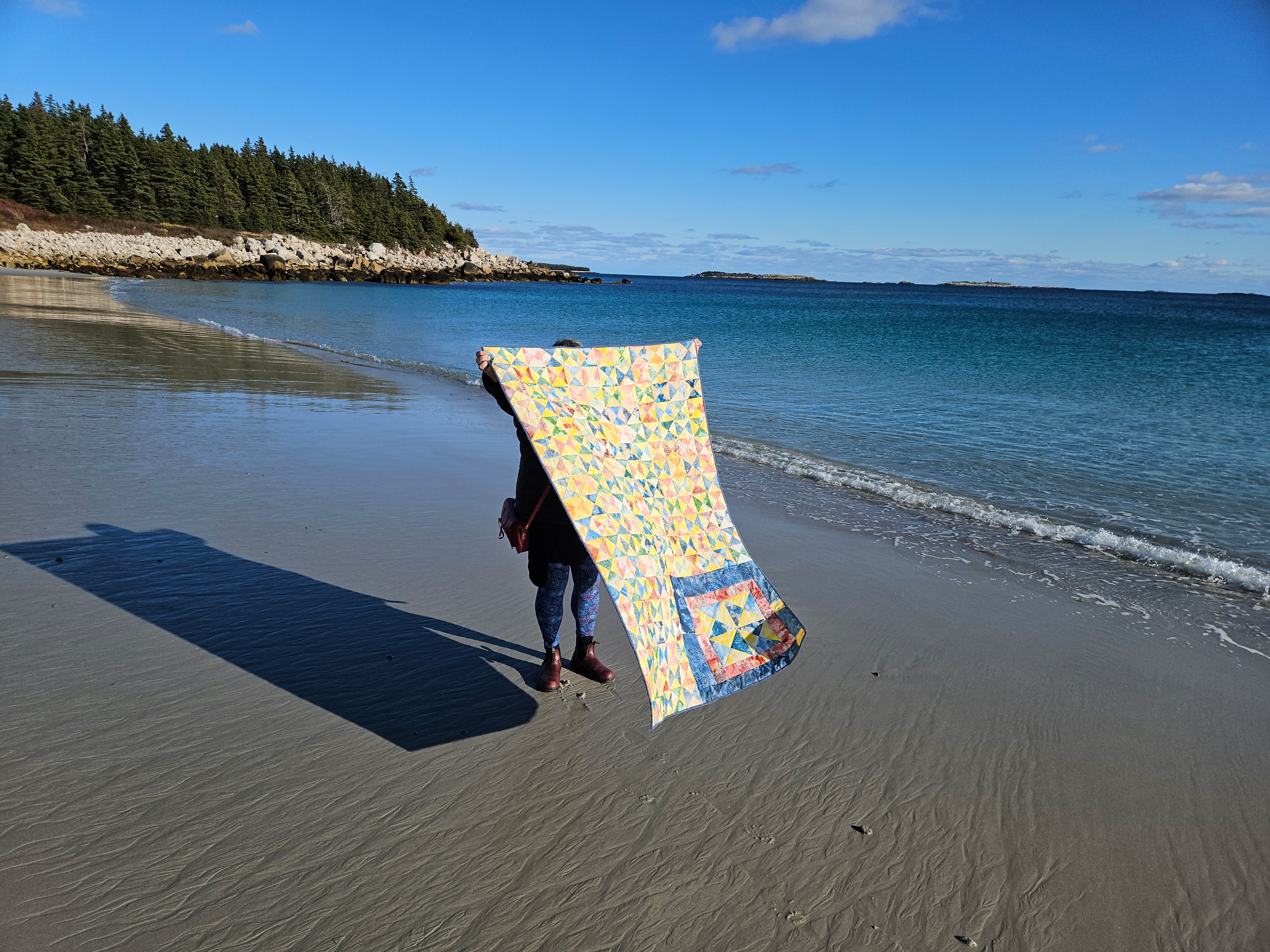
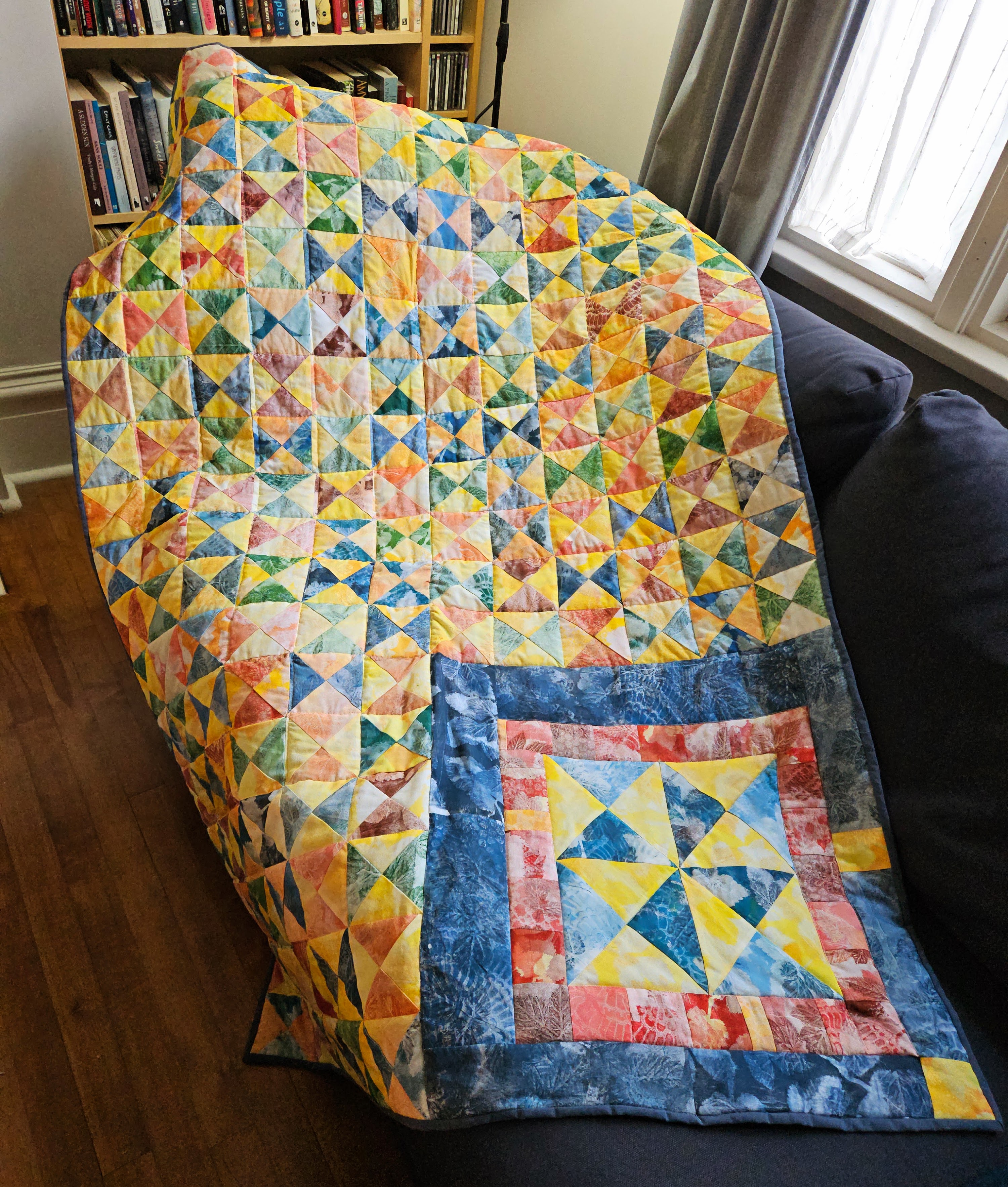

Medallion quilts were common in nineteenth-century English quilting. Sometimes the medallion in the centre featured an image from a heroic military exploit. I played with this idea but instead of having the medallion at the centre, I slipped it almost off the quilt altogether. Instead, the quilt is mostly made of the rhizomes that sprouted across the British Empire. As with the other “colonialism” quilts, this one was created with recycled fabric monoprinted with goutweed and doilies.
 SONJA BOON